Essential Compliance Responsibilities to Finalize Before the Close of 2026
As 2026 comes to a close, HR and benefits administrators face more than holiday planning and budget forecasting. Year-end compliance responsibilities are critical to avoid penalties, ensure smooth operations, and set your business up for a successful new year.
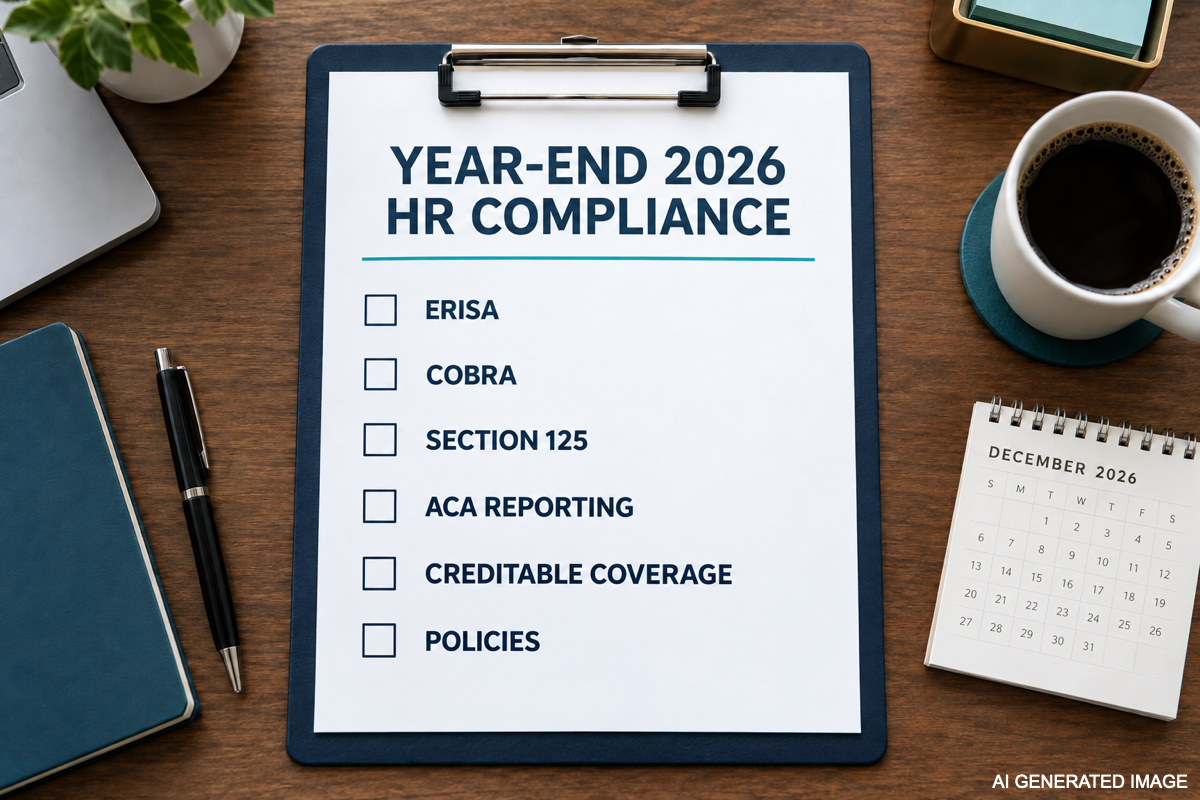
It can be daunting, but we're here to help, and the practical checklist below is a great place to start. Tackle one section at a time, and reach out to us if you get stuck. We'll go over ERISA, COBRA, Section 125, ACA reporting, creditable coverage notices, and handbook updates.
ERISA Plan Year-End Tasks
If your company offers health, dental, vision, life or disability benefits, you're likely subject to the Employee Retirement Income Security Act (ERISA). Before year-end, verify the following:
Wrap Plan Documents and Summary Plan Descriptions
Ensure your plan documents and wrap documents are current. If your plan has changed during the year, you need to update your Summary Plan Description (SPD) to reflect those changes. That can include coverage levels, eligibility rules, or benefits. An outdated SPD creates a compliance risk and can confuse employees about what's actually covered.
Verify Form 5500 Filings
If you filed a Form 5500 extension earlier in the year, your extended deadline is October 15, 2026. This requirement applies to employers with 100 or more participants in self-insured or ERISA-covered plans. Small welfare plans (fewer than 100 covered participants) that are fully insured or unfunded are generally exempt from this filing requirement.
Missing the Form 5500 deadline can result in significant Department of Labor penalties—up to $2,739 per day of noncompliance. Take a moment to verify that you filed or make arrangements to do so.
Finalize Plan Year Closeout Documentation
Complete all compliance documentation for plan-year reporting and maintain it in your ERISA file for audit protection. This includes testing results, nondiscrimination certifications, and any amendments made during the year.
Issue COBRA Notices
COBRA (the Consolidated Omnibus Budget Reconciliation Act) requires employers with 20 or more employees to offer continuation of health coverage after qualifying events such as termination of employment or reduction in hours. Each year, you need to communicate next year's rates to employees by November.
Conduct a COBRA Audit
Review all required notices to ensure they've been issued properly and within required timelines. If you missed a deadline, address it now before an employee files a complaint. Verify that notices are being sent on time, that premium billing is accurate, and that records are in order.
Update COBRA Rates for 2027
COBRA premiums for the next calendar year should be calculated and communicated to participants by November. Determine your plan's 102 percent rate (the COBRA premium cap) and ensure notices are distributed to covered beneficiaries.
Review Section 125 (Cafeteria Plan) Compliance
Section 125 plans allow employees to pay for benefits using pre-tax dollars. If benefits or eligibility rules have changed during the year, your plan document and summary must reflect those changes. This includes changes to FSA limits, dependent care FSA availability, or any shift in benefit offerings.
Conduct Nondiscrimination Testing
Highly compensated employees should not receive a disproportionate benefit under your pre-tax plans. Conduct nondiscrimination testing now to ensure compliance, particularly if any plan design changes were made during the year.
Clarify Carryover and Grace Period Rules
For health care and dependent care FSAs, determine your approach to unused balances. You can offer carryover (up to $680 in 2026), a grace period (up to 2.5 months into the following plan year), or a runout period. Communicate your policy clearly to employees so they understand how to use remaining FSA balances before year end.
Confirm ACA Reporting Requirements
Under the Affordable Care Act, Applicable Large Employers (ALEs), or those with 50 or more full-time or full-time equivalent employees, face specific reporting obligations.
Gather Data for Forms 1094-C and 1095-C
You must file Forms 1094-C and 1095-C with the IRS and distribute 1095-C forms to all full-time employees who had coverage during 2026. Verify that your payroll or benefits platform can accurately track full-time status, hours of service, and plan affordability.
Understand 2027 Filing Deadlines
For the 2026 calendar year:
- Distribute 1095-C forms to employees by March 2, 2027
- E-file Forms 1094-C and 1095-C with the IRS by March 31, 2027 (March 2 if filing paper returns, though most ALEs must file electronically)
Start gathering data now so you're not scrambling in the first quarter.
Track Full-Time Status Accurately
Ensure your records clearly show which employees were full-time for each month in 2026. The ACA's definition of "full-time" is 30+ hours per week. Misclassification is one of the most common ACA reporting errors.
Confirm Affordability Thresholds
The 2026 affordability rate is 9.96 percent of household income (up from 9.02 percent in 2025). Use this threshold when evaluating whether your lowest-cost self-only health plan meets affordability requirements.
Distribute Creditable Coverage Notices
If your business offers a group health plan that includes prescription drug coverage—whether fully insured or self-funded—you must notify Medicare-eligible individuals each year whether your coverage is creditable or non-creditable under Medicare Part D guidelines.
Understand Creditable vs. Non-Creditable Coverage
"Creditable coverage" means your plan's prescription drug benefits are expected to pay at least as much, on average, as standard Medicare Part D. If your plan does not meet this standard, it's classified as non-creditable. This distinction matters because Medicare-eligible individuals may face late-enrollment penalties if they delay signing up for Part D without having creditable coverage in place.
Identify All Required Recipients
You must provide this notice to anyone eligible for your plan's prescription drug coverage, whether or not they're currently enrolled. This includes:
- Active employees
- COBRA beneficiaries
- Covered spouses and dependents
- Any Medicare-eligible individual eligible for coverage under your plan
Do not assume someone is not Medicare-eligible based on age or employment status. When in doubt, issue the notice.
Meet Annual Deadline
The Creditable Coverage Notice must be provided annually before October 15.
Additional timing requirements include:
- Before an individual's initial Medicare Part D enrollment
- Before coverage begins for new hires or newly eligible individuals
- Within 30 days of any change in your plan's creditable status
- Upon request from a plan participant
File With CMS
In addition to notifying participants, you must report your plan's creditable coverage status to the Centers for Medicare & Medicaid Services (CMS) annually. Submission must occur:
- No later than 60 days after the start of your plan year
- Within 30 days of any change in status
- Upon termination of the plan
This filing is completed electronically through the CMS Creditable Coverage Disclosure Portal. Failure to submit on time can result in penalties.
Update Employee Handbooks and Policies
The end of the year is an ideal opportunity to review and refresh your employment policies.
Review for State and Local Law Changes
Employment law is constantly evolving. Review your handbook and policies for compliance with updated state or local laws, including minimum wage requirements, paid leave mandates, harassment prevention policies, and any new local employment rules that took effect during 2026.
Update Schedules and Policies
Refresh holiday schedules, paid time off policies, benefits summaries, and any procedures that changed during the year. Inconsistencies between your handbook and actual practice create compliance risk and employee confusion.
Incorporate New Requirements
Depending on your jurisdiction, ensure your handbook addresses emerging topics such as remote work guidelines, artificial intelligence use disclosures, pregnancy accommodation policies, or any other regulatory changes affecting your workforce.
Looking Forward
Year-end HR compliance is essential to keeping your business legally sound and your employees protected. Close out the year properly to prevent headaches, fines, and missed deadlines in the months ahead.
As you work through the checklist above, if you have questions about any of these requirements, reach out to us. We can help you navigate the details specific to your situation and industry.